United Winners Laser Co., Ltd.
Stock Name: UW Laser Stock Code: 688518
View More

Introduction
AI large-model training and inference now require high-density, low-PUE and highly reliable racks and clusters, instead of simply adding more GPUs. Single NVIDIA GB200/GB300 NVL72 racks consume 130-140 kW, and the upcoming Rubin architecture exceeds 200 kW. Traditional air cooling has hit its physical limit; liquid cooling has become mandatory for AI data centers.
TrendForce reports that the global liquid cooling penetration rate for data centers reached around 33% in 2025. IDC predicts China’s liquid-cooled server market will surpass USD 16.2 billion by 2028, confirming strong market growth.
This growth relies on a scalable domestic liquid cooling supply chain, including cold plates, pipelines, manifolds and precision welding. Liquid cooling pipelines act as the system’s vascular network. Bellows walls are merely 0.1-0.5 mm thick. Weld microcracks or cold joints can cause leakage after thermal cycling. Zero leakage is essential-even a tiny coolant leak can destroy GPUs and crash entire racks.
Conventional brazing and TIG welding produce large thermal deformation, high porosity and poor batch consistency on ultra-thin, highly reflective copper multi-branch circumferential seams. Laser welding offers low heat input, non-contact processing and easy integration with vision and in-line inspection. It achieves deep fusion and helium-tight sealing (≤10⁻⁹ Pa·m³/s), emerging as the benchmark process for leak-free liquid cooling parts.
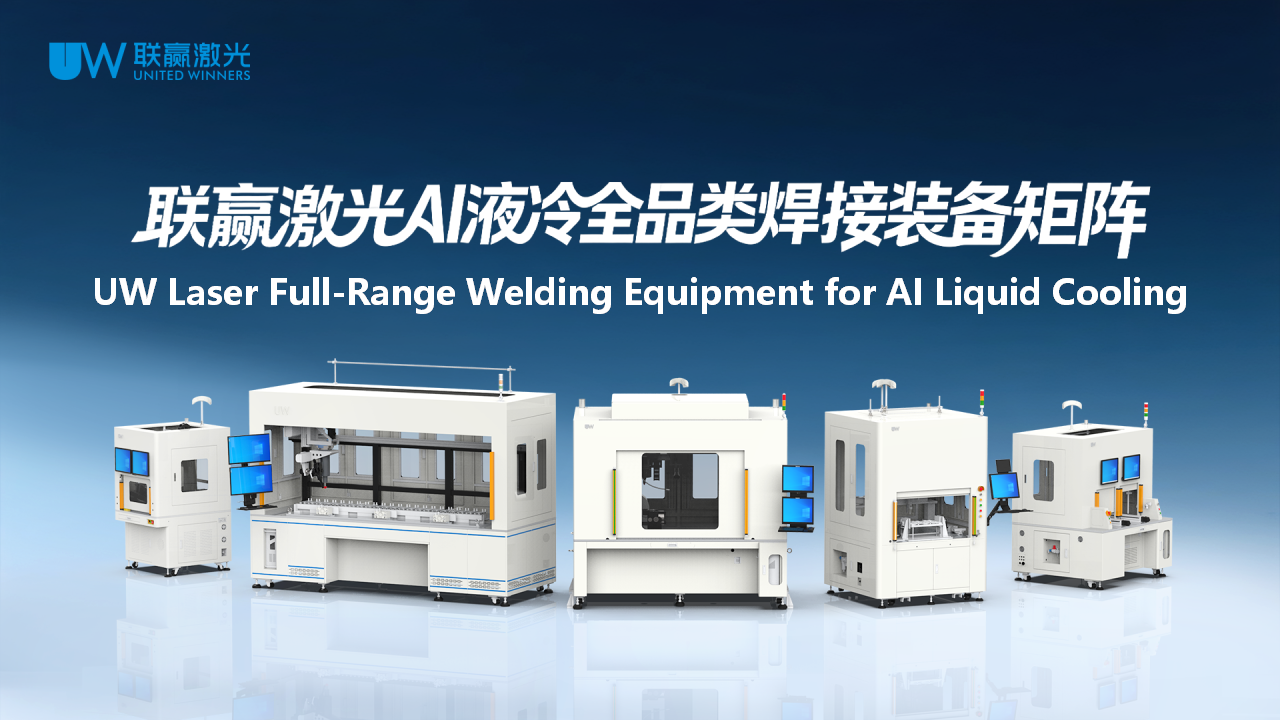
For AI liquid cooling applications, UW Laser provides welding equipment for manifolds, end caps, inner manifolds, bellows, copper cold plates and liquid cooling assemblies. With full in-house R&D, we develop YAG, diode, fiber, hybrid, blue, ring-beam and ultrafast lasers, ranging from hundreds to tens of kilowatts, with wavelengths 266 nm (UV) to 2000 nm. Our self-developed wobble heads and spot welding heads deliver excellent optical performance and stability.
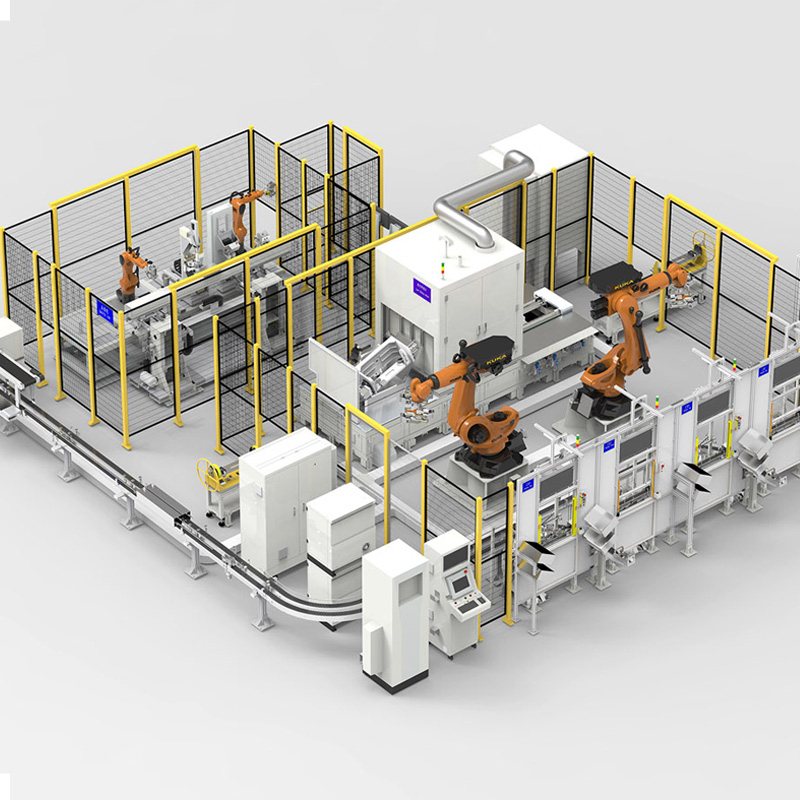
We form a closed loop covering laser sources, optics, motion, tooling, processes and automation. Our solutions include standalone gantry machines, robotic cells and fully automatic turnkey lines. Integrated with MES, they support full process recording and quality traceability to meet leak-free mass-production requirements for intelligent computing center liquid cooling components.
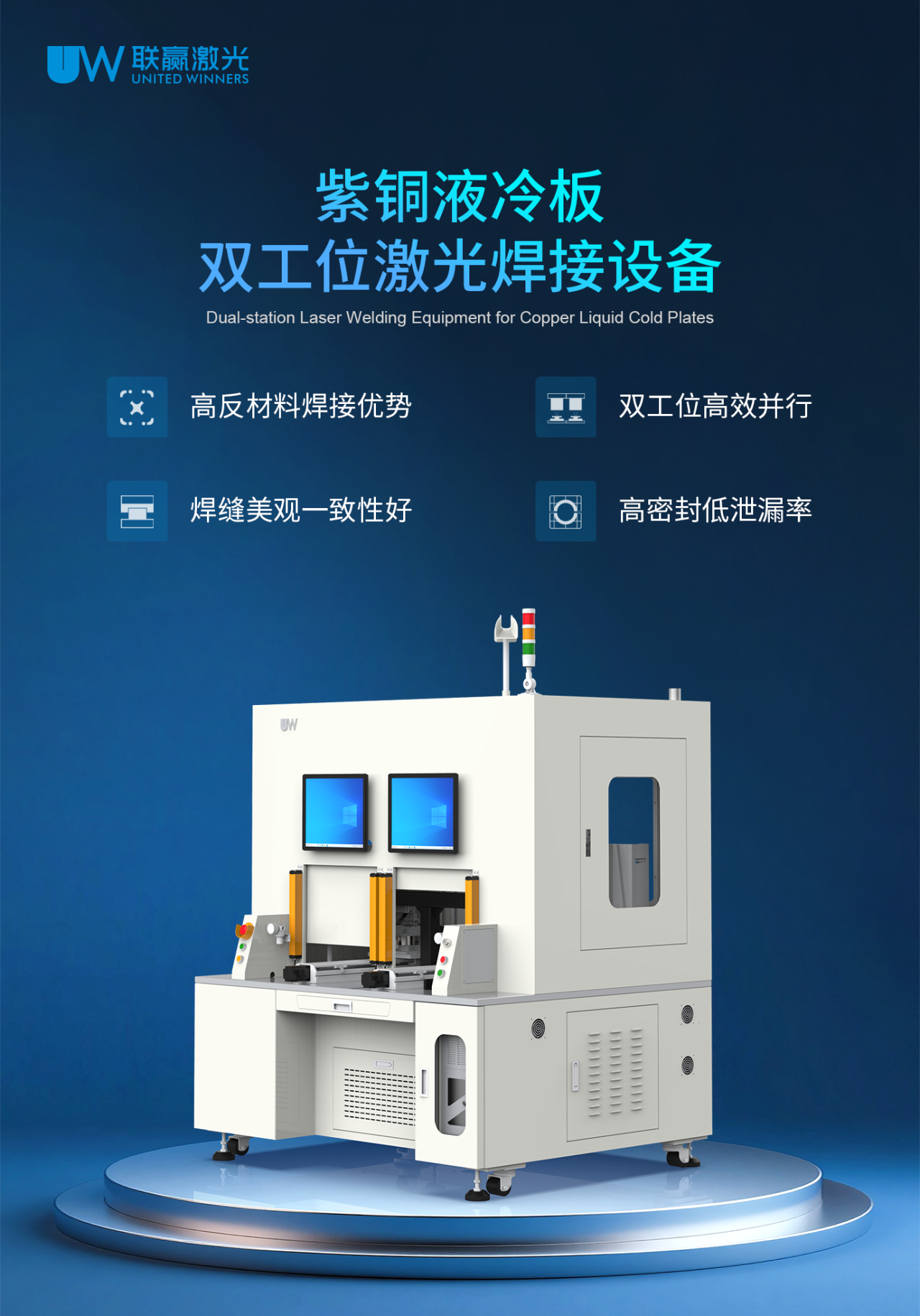
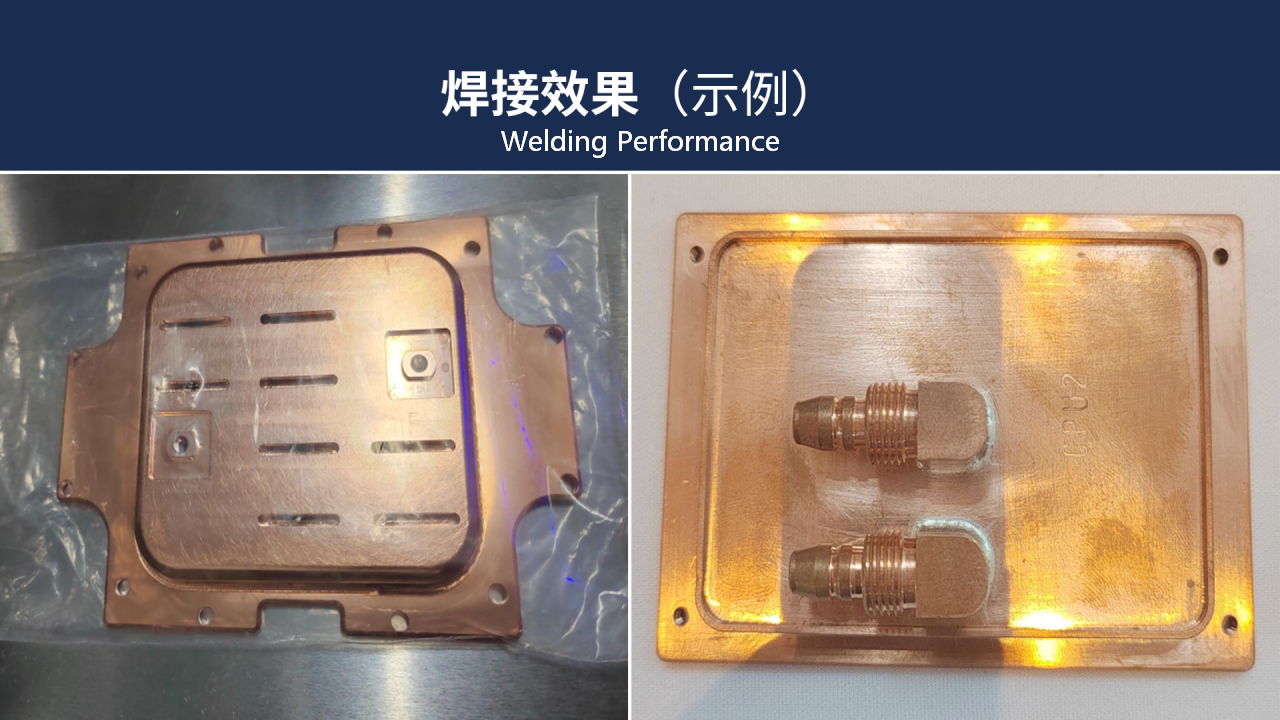
(1) Dual-Station Laser Welding Equipment for Copper Cold Plates
Equipment Introduction
Equipped with UW Laser’s self-developed blue hybrid laser and UW dual-wavelength wobble laser processing head, the system combines the high absorptivity of blue light on copper and the high power density of infrared light. It resolves welding challenges including spatter, porosity and cold joints for highly reflective materials such as copper, and is used for long-seam sealing welding of flow channels on copper cold plates.
Advantages
Superior for Highly Reflective Materials
Copper absorbs little near-infrared laser energy and is hard to weld. The machine supports UW’s in-house 450 nm blue hybrid laser or ring-beam fiber laser to curb spatter and porosity.
Efficient Dual-Station Parallel Workflow
Dual-station design allows loading/unloading and welding to run at the same time, lifting equipment uptime and mass production efficiency.
High Sealing Performance with Low Leakage
Optimized welding processes deliver leakage rates down to 10⁻⁹ Pa·m³/s, ensuring reliable long-term operation of liquid cooling systems.
Low Thermal Deformation
Highly concentrated laser heat input, paired with UW’s intelligent temperature control and process library, restricts thermal deformation and preserves plate flatness.
High-Quality Weld Beads
Proprietary ring-beam technology ensures stable, consistent and smooth welds, cutting down post-weld grinding.
(02) Laser Welding Equipment for Water Manifolds
Introduction
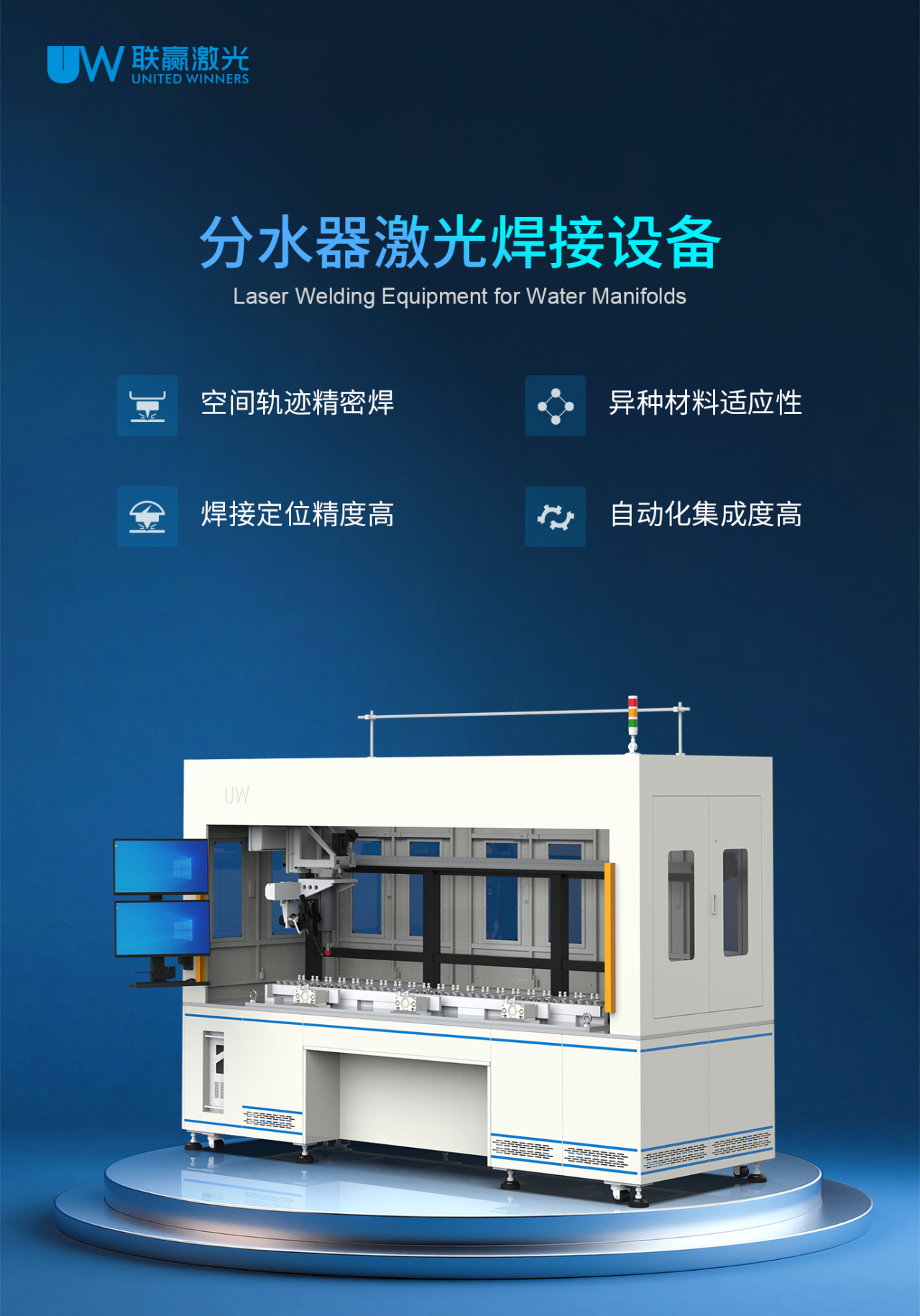
Equipped with UW Laser’s self-developed single-mode/quasi-single-mode fiber laser and D30 wobble processing head, it welds circumferential and sealing seams between manifold pipes and nozzle bases. Suitable for aluminum and stainless steel manifolds, it supports standalone 6-axis gantry stations and 6-axis robotic welding stations.
Advantages
Complex 3D Path Welding
Manifolds feature intricate spatial structures. Paired with robotic cells or high-precision 3D motion platforms, the machine delivers precise welding on complex spatial curves.
Compatibility for Dissimilar Materials
Manifolds often join aluminum, copper, stainless steel and other metals. UW’s multi-wavelength coaxial hybrid welding combines the strengths of two lasers and suppresses brittle intermetallic compounds in dissimilar-metal welding.
High Welding Accuracy
High-precision fixtures and positioning systems guarantee accurate welding of branch pipes and ports. Repeat positioning accuracy: ±0.03 mm / 300 mm.
Balanced Penetration & Speed
Parameters optimized for manifold wall thickness secure sufficient penetration for joint strength at high speed (up to 200 mm/s for aluminum alloys).
High Automation
This turnkey system can integrate automatic loading/unloading, seam tracking and in-line inspection to reduce manual work and stabilize batch consistency.
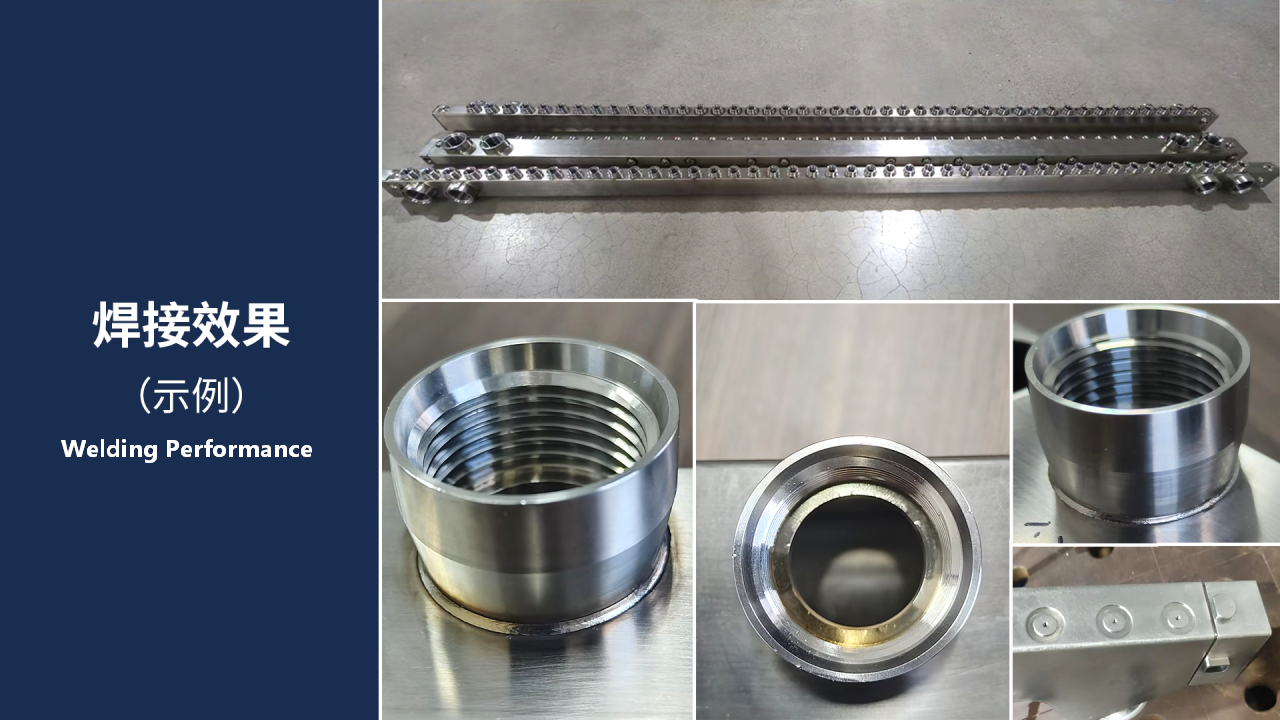
(03) Inner Manifold Laser Welding Equipment
Equipment Introduction
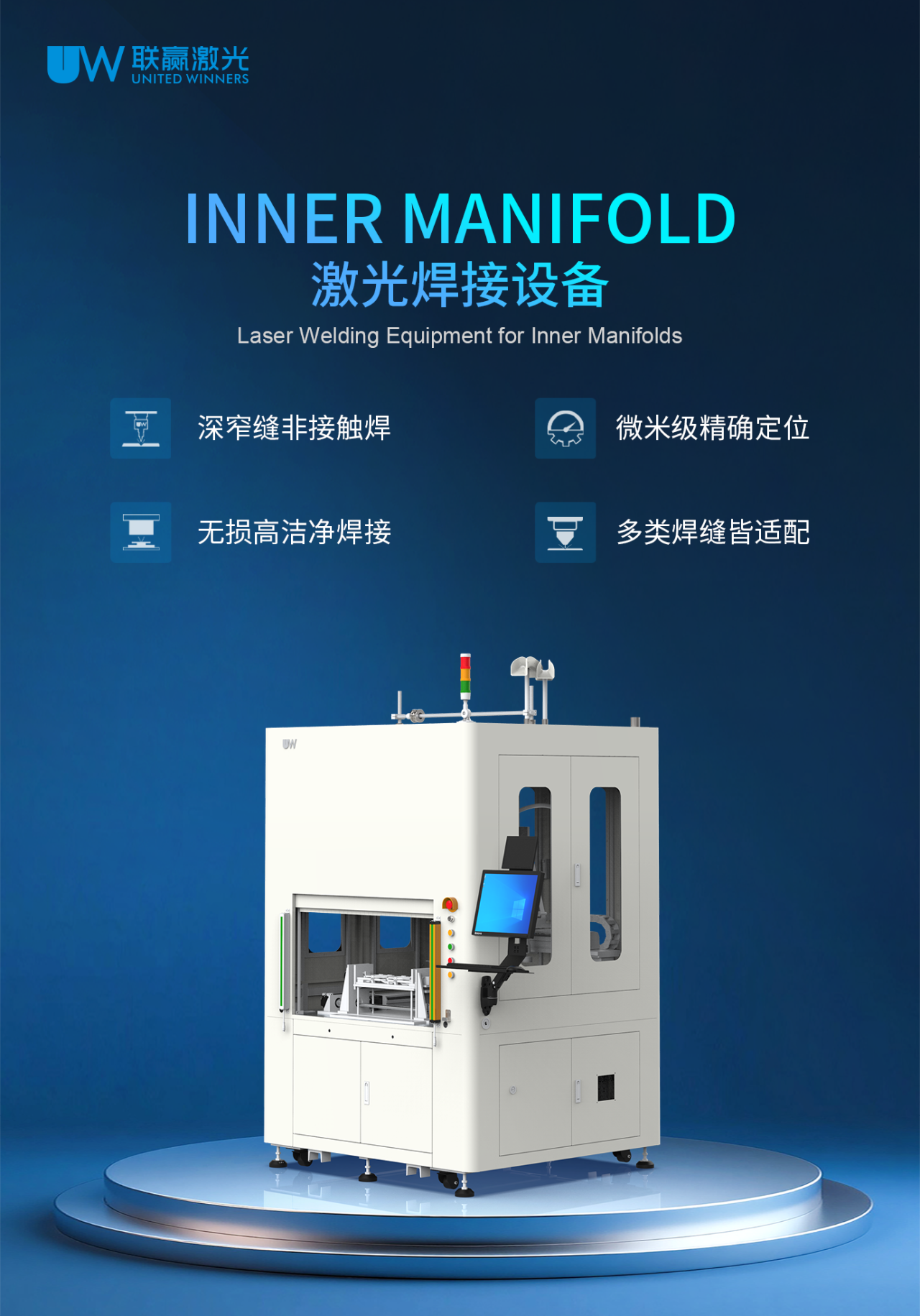
This equipment is equipped with UW Laser’s self-developed single-mode continuous laser and D30 oscillating laser output head. The central beam delivers penetration depth while the annular beam stabilizes the molten pool to suppress spatter and porosity. It is suitable for complex flow channel structures of inner water manifolds and high-demand hermetic welding applications.
Equipment Advantages
Welding Access to Internal Deep Narrow Slits
Specially designed for inner manifolds, the welding torch or laser head can penetrate into the assembly to perform non-contact welding on weld seams that are hard to reach via conventional methods.
High-Precision Positioning and Micro Welds
Built for the intricate structure of inner manifolds, the system can focus into an ultra-fine (micron-level) laser spot for high-precision spot welding or seam welding without damaging adjacent precision features.
Real-Time Closed-Loop Control
Adopting UW in-mold welding and real-time control technology, it implements closed-loop feedback control throughout the welding process to guarantee consistent and reliable weld quality for every joint.
High-Cleanliness Welding
Laser welding is a non-contact process with no mechanical stress. The welding process remains clean and debris-free, preventing contamination of internal flow channels.
Compatibility with Multiple Weld Configurations
It flexibly supports butt welds, lap welds, fillet welds and other joint types inside inner manifolds to accommodate diverse design requirements.
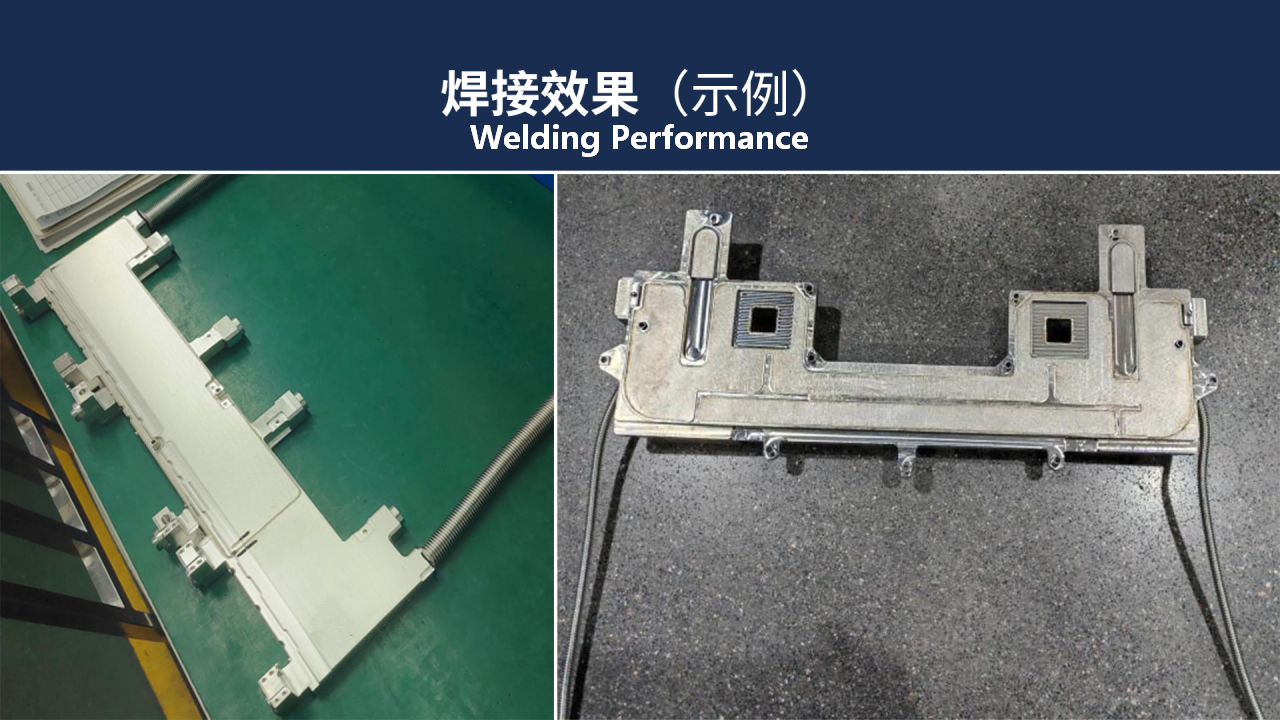
(04) Bellows Welding Equipment
Equipment Introduction
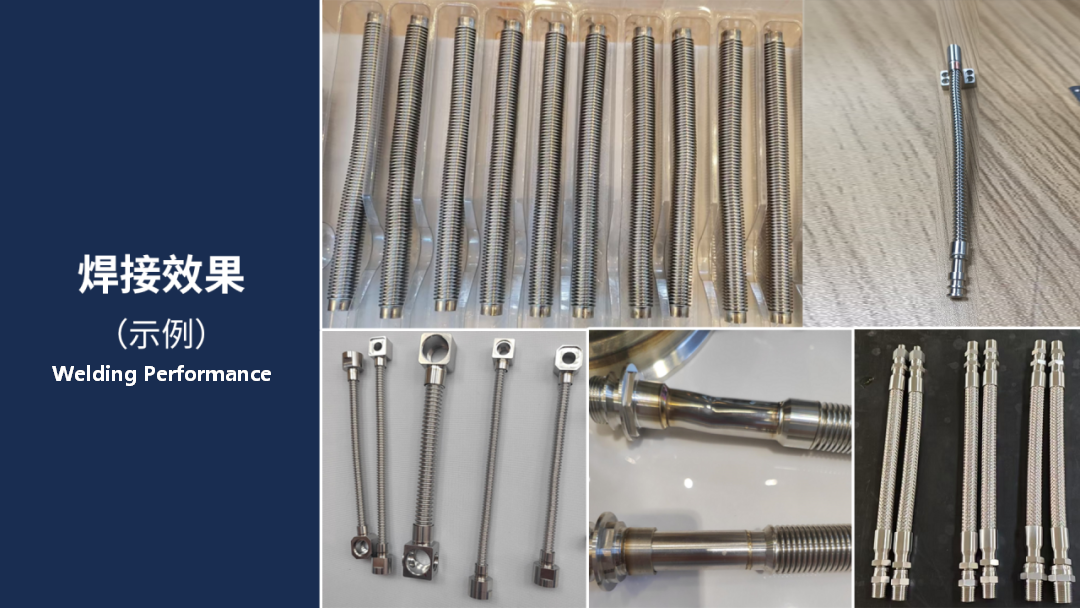
This equipment is equipped with UW Laser’s self-developed multi-mode fiber laser and D30 oscillating laser output head. It is designed for butt welding of thin-walled bellows and dissimilar metals, suitable for circumferential seam welding between bellows and fittings. It balances weld ductility and sealing reliability, and applies to pipeline components for computing power and energy storage systems.
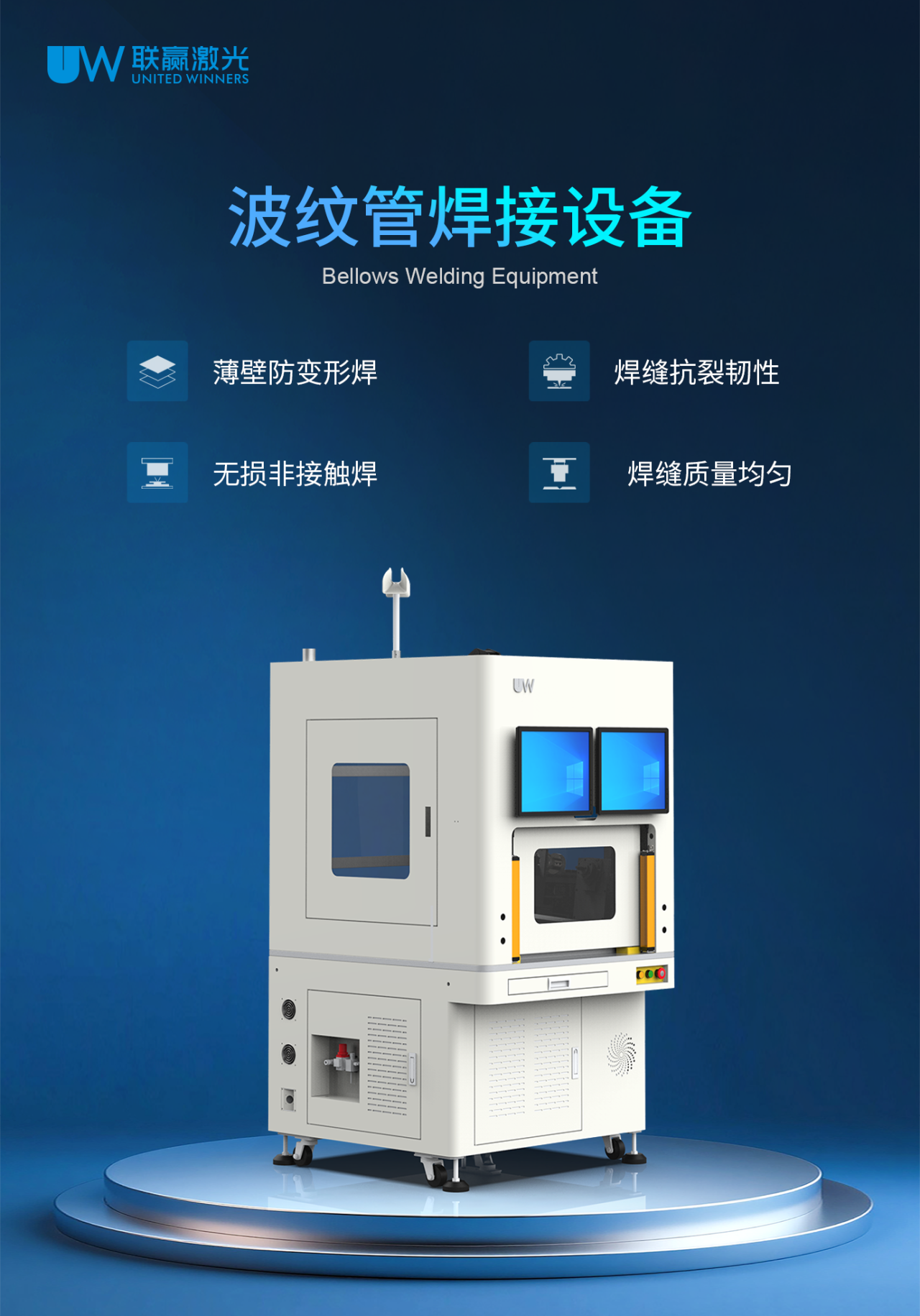
Equipment Advantages
Welding for Thin-Walled Materials Prone to Deformation
Bellows have extremely thin walls and are highly vulnerable to deformation and burn-through. Laser welding features precisely controllable energy and minimal heat input, making it an ideal process for thin-walled bellows welding.
High Welding Speed and Productivity
With ultra-fast welding speed, it can efficiently complete circumferential welds between bellows, connectors and flanges, well suited for mass production.
Superior Weld Ductility
Laser welding forms fine-grained weld microstructures with good crack resistance. It prevents weld failure when the bellows undergoes repeated expansion, contraction and bending during service.
Non-Contact Welding Process
No mechanical compression or damage is inflicted on the thin bellows structure, retaining the original geometric accuracy and elasticity of the bellows.
Automated Circumferential Welding
Usually fitted with a rotary table or positioner, the system supports automated, all-position precision welding of bellows circumferential seams and ensures consistent quality around the full weld circle.
(05) Multi-Function Spot Welding Equipment
Equipment Introduction
This equipment is equipped with UW Laser’s self-developed YAG laser and 6kW fiber laser output head. It is used for positioning spot welding, pre-fixing and local fusion welding of threaded seats, joints and connectors on liquid cooling assemblies. It enables fast spot welding and can be integrated into various welding workstations for pre-positioning before welding.
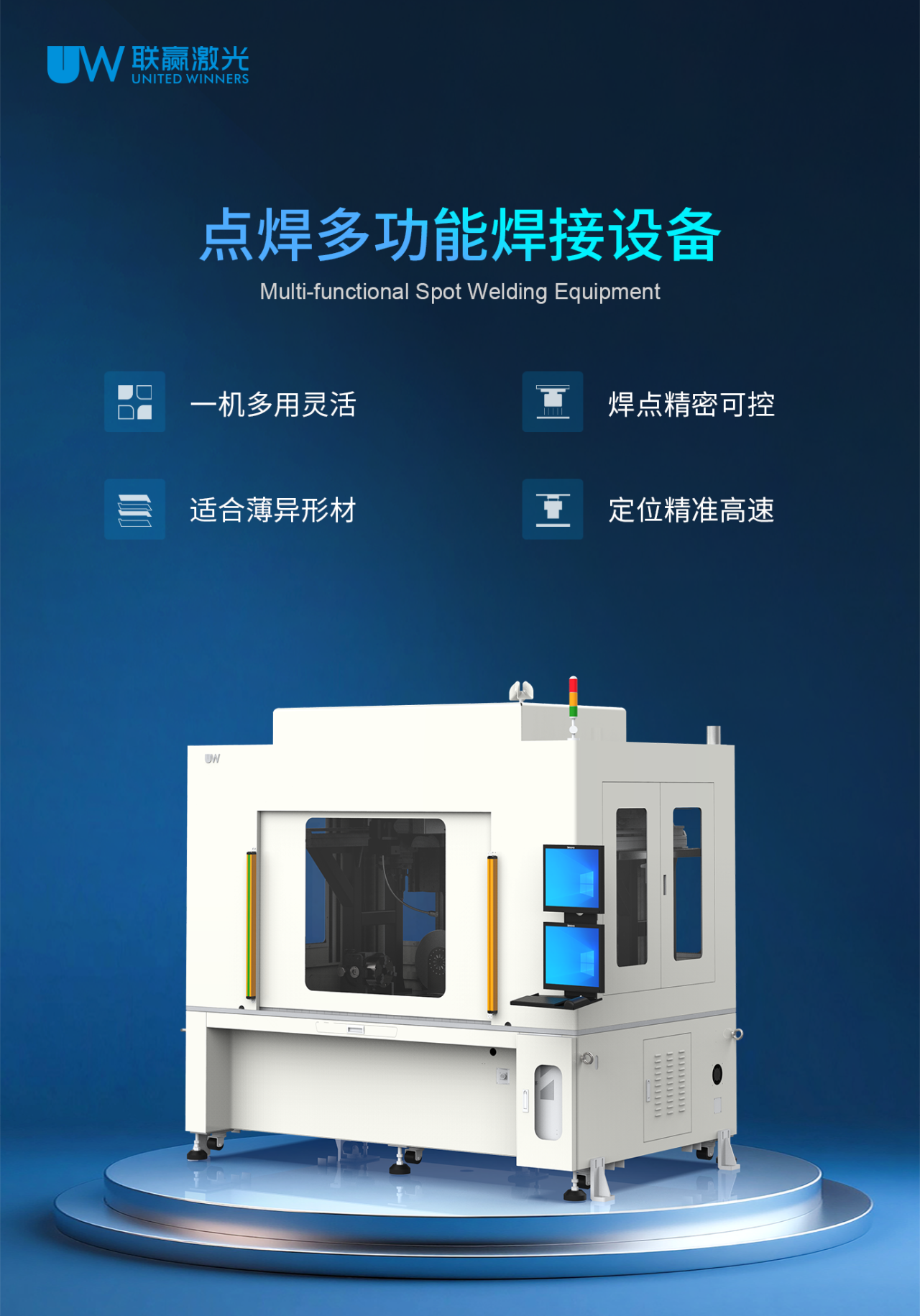
Equipment Advantages
Multi-Purpose Machine with Flexible Switching
Featuring both spot welding and multi-functional welding capabilities, the equipment supports rapid switching via software and hardware configuration to meet welding requirements for different products and positions.
Precisely Controllable Spot Size
By adjusting laser pulse power, pulse width and spot size, the diameter and penetration depth of weld spots can be accurately controlled, suitable for precision joining.
Suitable for Thin Sheets and Special-Shaped Parts
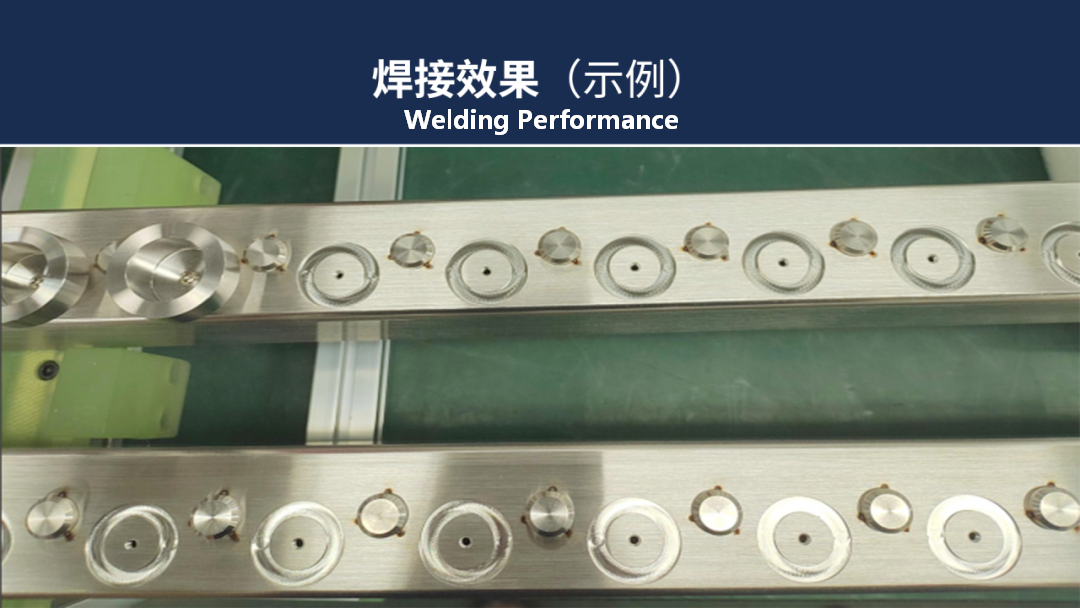
For thin-walled connectors and small profiled components in heat sinks and liquid cooling plates, spot welding delivers sound joints with minimum heat input and prevents thermal distortion of the whole part.
High Positioning Accuracy
Paired with a high-precision motion system or galvanometer scanning system, it enables high-speed, high-accuracy point-by-point welding with accurate spot placement.
Weldable for Refractory and Dissimilar Materials
With high-peak-power pulsed laser, it performs effective spot welding on highly reflective materials such as copper and aluminum, as well as dissimilar materials.
·END·
With over 20 years of precision laser welding experience, UW Laser delivers turnkey liquid cooling welding solutions covering the full closed loop of “laser source–optics–motion–tooling–process–automation”.
Our self-developed laser portfolio includes YAG, diode, fiber, hybrid and ring-beam lasers (tens of watts to 10 kW, blue to 1 μm NIR). Combined with proprietary oscillating and spot welding heads, they cater to varied process requirements of five types of liquid cooling parts.
Equipped with vision alignment, in-process OCT monitoring, process simulation and full data logging, our welding achieves near-base-material weld strength, 0.2–0.5 mm HAZ and ≤0.05 mm deformation, mitigating risks of solder corrosion and channel clogging. We serve customers in intelligent computing hardware and AI liquid cooling with flexible offerings: standalone workstations, robotic cells and full auto lines. Free sampling, existing-line retrofitting and local on-site support across China are available.
The liquid cooling market sees strong growth. UW Laser is ready to partner with industry players to advance AI liquid cooling welding.
For sample tests or solution consultation: marketing@uwlaser.com