United Winners Laser Co., Ltd.
Stock Name: UW Laser Stock Code: 688518
View More
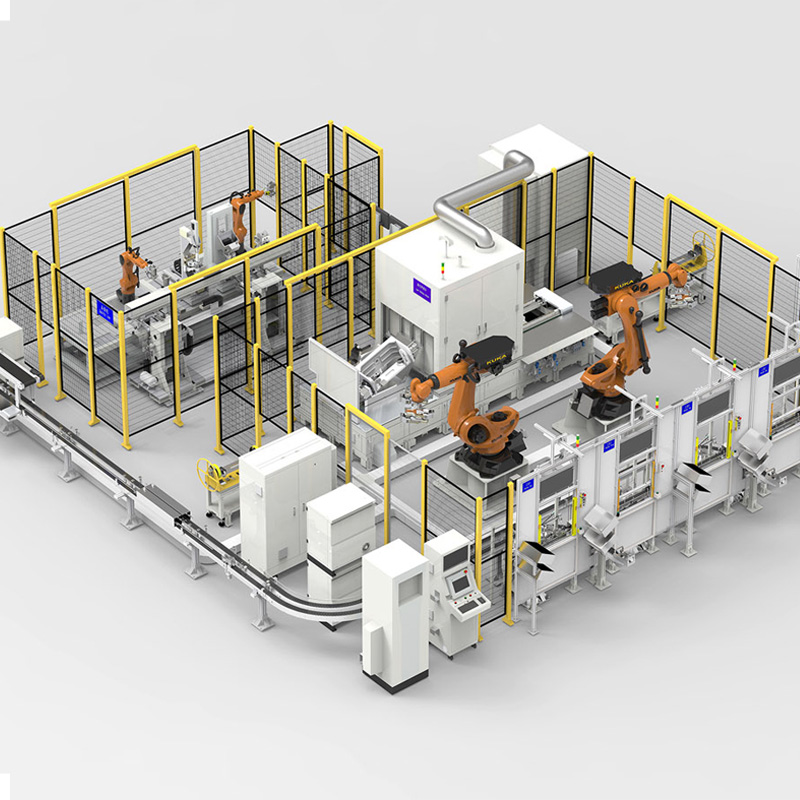

With the explosive growth of new energy vehicles, industrial automation, and smart homes, relays—as core components for circuit control—are witnessing a continuous surge in market demand. In 2025, the size of China's relay market exceeded RMB 60 billion, and it is projected to reach RMB 68 billion in 2026, maintaining a compound annual growth rate (CAGR) of 8%–10%. Among this, the automotive electronics sector accounts for 32%, with the demand for high-voltage relays in new energy vehicles registering a year-on-year increase of 25%; meanwhile, the demand for miniaturized, low-power-consumption products in the smart home sector makes up 15%. On the global front, the AC electromagnetic relay market surpassed USD 5.8 billion in 2024 and is expected to grow to USD 7.3 billion by 2030.

The industry is accelerating its evolution toward high reliability, miniaturization, and intelligence, imposing stringent requirements on the precision, efficiency, and integration capability of production equipment. For the high-end market dominated by international giants such as Omron and TE Connectivity, welding and sealing yield, electrical performance precision, and data traceability have been established as core access criteria.
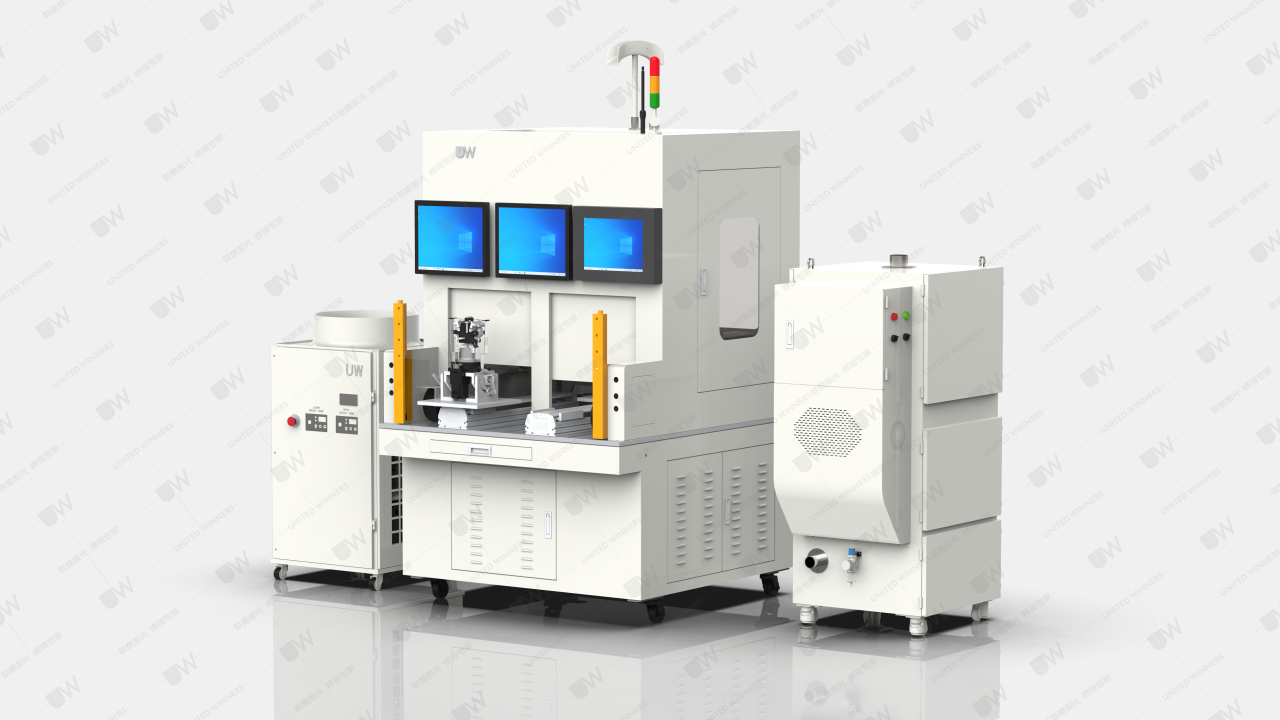
1. UW Dual-station Relay Welding Bench
The dual-station relay welding bench independently developed by UW Laser is composed of fixtures, a 3-axis welding module, a coaxial rotary shielding gas blowing structure, dual loading and unloading shafts, a PLC control system, a laser welding system, and other components; it enables automatic welding with manual loading and unloading, and all units of the welding bench adopt a modular design and can operate independently; the welding head is configured with an external rotary coaxial gas blowing structure, with a maximum welding speed of 20 mm/s depending on the thickness of the workpiece; welding paths can be input via CNC programming or teaching mode, the automated welding program during the welding process is modifiable, and operation and modification permissions can be set; a 17-inch display is provided as standard.
Highlights
Equipped with an imported fiber laser as the processing light source, it features high energy, excellent beam quality, fast welding speed, a large depth-to-width ratio, concentrated energy, and a small heat-affected zone.
The motion axes are driven by servo motors, with precision ball screws and linear guide rails adopted as transmission components. It delivers high precision and fast speed, boasting a maximum no-load speed of 300 mm/s and a repeat positioning accuracy of ±0.03 mm/300 mm.
The control system supports multi-axis linkage, and the welding head is equipped with an external coaxial gas blowing function.
The whole machine adopts a modular and standardized design, featuring a compact size and no consumables required, which ensures more convenient maintenance.
2. UW High-voltage Relay Assembly and Welding Automatic Line
This production line integrates the full-process functions of high-voltage relay assembly, testing and packaging, supporting 38 processes including pallet laser marking, laser welding/riveting, moving contact/iron core assembly, air gap detection, contact cleaning, parameter measurement, ceramic-to-Kovar spot welding/full welding, helium leak detection & gas charging/discharging, magnet magnetizing & mounting, potting & pressing, as well as aging testing, realizing fully unmanned operation.
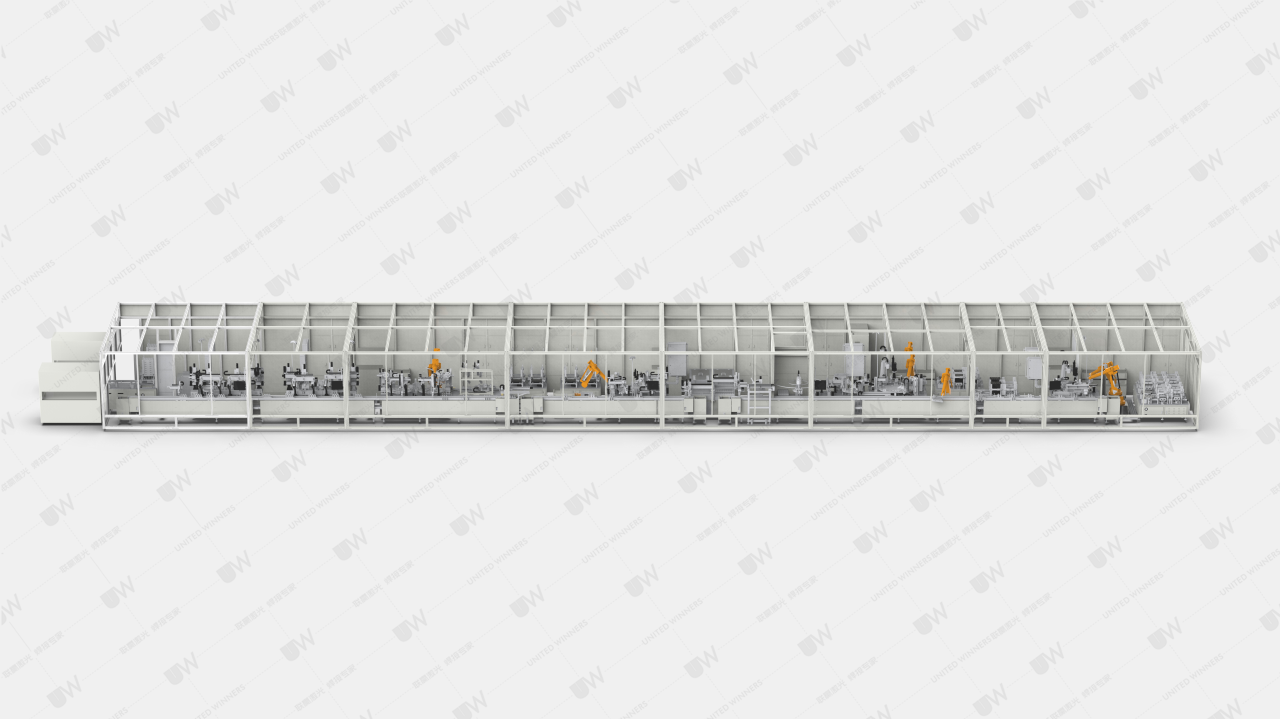
The production line comes standard with a CCD vision system and high-performance sensors, and supports MES data binding. Its production capacity covers a graded range of 500–800 pcs per hour (with the pre-research line reaching 800 pieces per hour). The welding unit is equipped with an RWD weld penetration monitoring system and a self-developed oscillating welding head, while the electrical testing unit integrates a circuit self-test function to ensure the precision and reliability of sealing performance and electrical properties.
Highlights
3. UW Fully Automatic Line for Low-voltage Relays
This production line integrates the full processes of high-speed loading → modular assembly → in-line testing → packaging, and realizes core procedures including precision assembly of contacts/coils (with a positioning accuracy of ±0.05 mm), coil winding, contact riveting, plasma surface activation, dispensing and sealing, vacuum testing (replacing alcohol testing), as well as FD parameter testing.
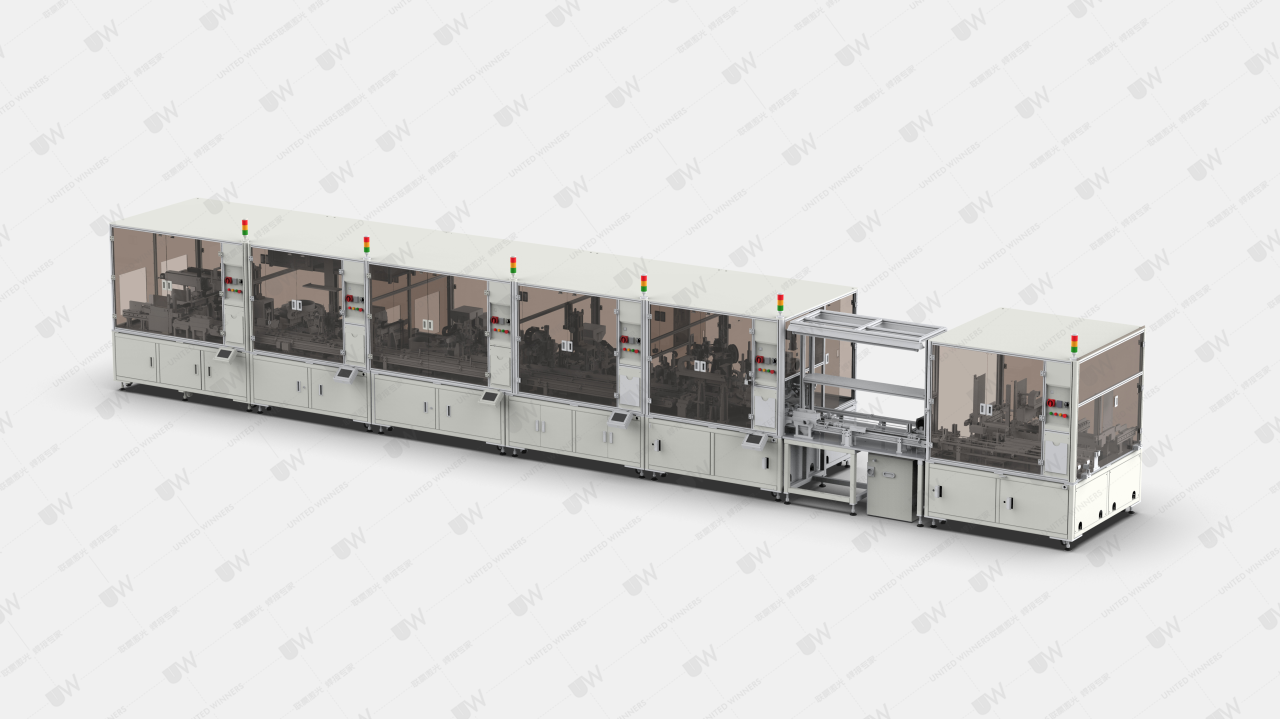
The production line adopts six-axis industrial robots and machine vision systems, combined with MES system-enabled data traceability. It supports quick model changeover for relays such as JIS-12 and RT series; the single-line production capacity reaches 1,200 pieces per hour, with the defect rate stably controlled at ≤ 50 PPM, meeting the stringent standards of customers such as TE Connectivity and Omron in the fields of automotive electronics and smart home.
Highlights
END
From ensuring sealing reliability in high-voltage scenarios, to balancing high throughput and low defect rates in low-voltage applications, and further to delivering dual-station solutions that flexibly meet customized demands, UW Laser has built a full-scenario intelligent production line system for relay manufacturing, with modular design as the core, precision control as the support, and data traceability as the link. These three production lines achieve differentiated throughput coverage of 800 pieces per hour and 1,200 pieces per hour respectively. They maintain a stable defect rate of ≤ 50 PPM, cut energy consumption by 30%, and achieve OEE over 85%. The system not only meets stringent standards such as automotive-grade requirements and IP67 rating, but also addresses the industry's core demands for automation, low energy consumption and data traceability.